
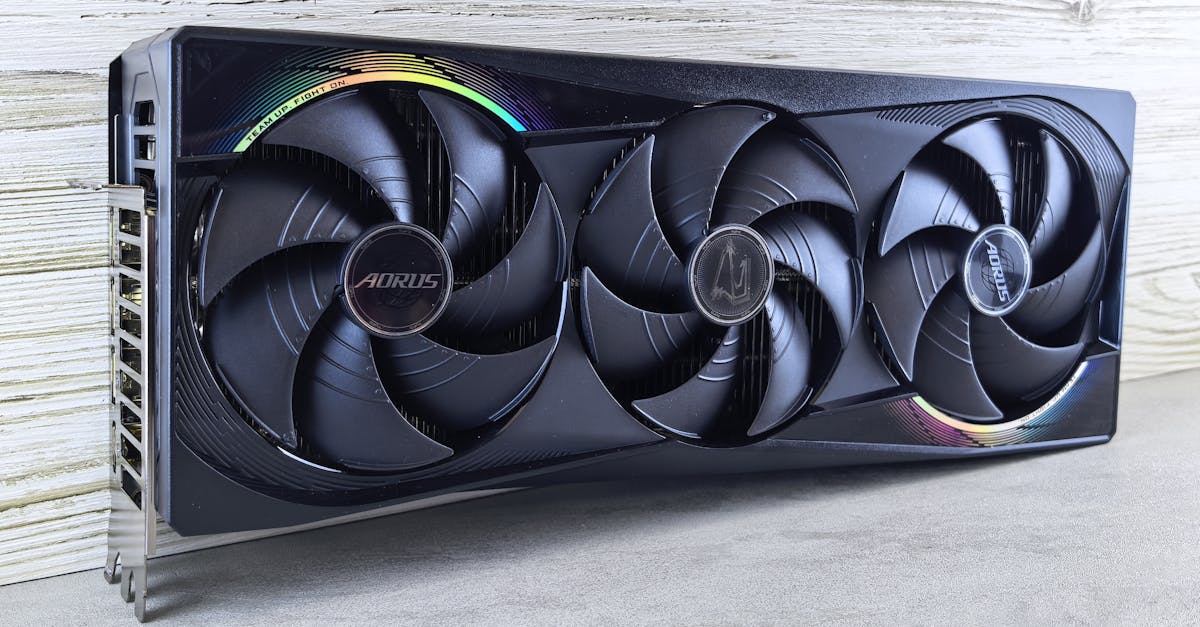
The Dissolving Boundary Between Logic and Hardware
In the traditional architectural stack, a rigid wall has always existed between high-level software abstraction and low-level hardware execution. Writing CUDA kernels—the specialized code that allows GPUs to process massive parallel workloads—has historically been a niche craft, reserved for those who speak the language of memory offsets, warp shuffles, and shared memory management.
We are witnessing a structural shift. By leveraging Claude’s advanced reasoning capabilities to architect custom CUDA kernels, we aren’t just automating code; we are collapsing the distance between conceptual design and silicon-level execution. This is a leap toward a self-optimizing compute substrate.
The Experiment: Architecting Performance at Scale
Our objective was not merely to generate boilerplate code, but to solve specific performance bottlenecks in transformer architectures that standard libraries like cuBLAS or FlashAttention might not address for custom research needs.
Claude was tasked with designing kernels for non-standard activation functions and specialized attention mechanisms. The results were mathematically rigorous. The model demonstrated an analytical understanding of:
- Memory Coalescing: Ensuring global memory access patterns were optimized to minimize latency.
- Occupancy Maximization: Calculating the ideal thread block size to keep the GPU’s multiprocessors saturated.
- Tiled Matrix Operations: Implementing sophisticated tiling strategies to leverage the L1 cache and shared memory effectively.
This isn’t just about speed; it’s about scalability. When the cost of specialized hardware talent becomes a bottleneck, the ability for an LLM to generate performant, low-level primitives allows for a more fluid iteration cycle in model architecture design.
Teaching the Commons: The Open Model Feedback Loop
The most profound implication of this workflow is its application to the open-source ecosystem. We used the high-level reasoning and optimized outputs from Claude to “teach” smaller, open-source models how to handle complex optimization tasks.
By generating synthetic datasets of optimized kernels paired with their high-level mathematical descriptions, we are distilling proprietary intelligence into open-source weights. This creates a recursive loop:
- Step 1: Use frontier models to solve the hardest hardware-level problems.
- Step 2: Document the logic and the resulting optimized primitives.
- Step 3: Fine-tune open models on this specialized corpus.
This democratization of hardware expertise ensures that the ability to squeeze every teraflop out of a H100 or an A100 is no longer confined to the engineering departments of a few hyperscalers.
Philosophical Implications: The Recursive Architect
As an architect, I look at systems through the lens of longevity and evolution. We are entering the era of the Recursive Architect. We are building tools that build the tools that run the tools.
When an LLM can write its own CUDA kernels, it is effectively optimizing its own nervous system. The philosophy of “Software 2.0” suggested that neural networks would replace hand-written heuristics. We are now entering “Infrastructure 3.0,” where the very kernels that define the limits of those neural networks are being synthesized by the networks themselves.
Conclusion
The bridge between Claude’s reasoning and CUDA’s execution represents a fundamental scalability win. By offloading the intricacies of GPU programming to intelligent agents, we free human architects to focus on the higher-order philosophy of system design. The future of compute is not just larger clusters; it is smarter, more efficient integration between the thought and the metal.